
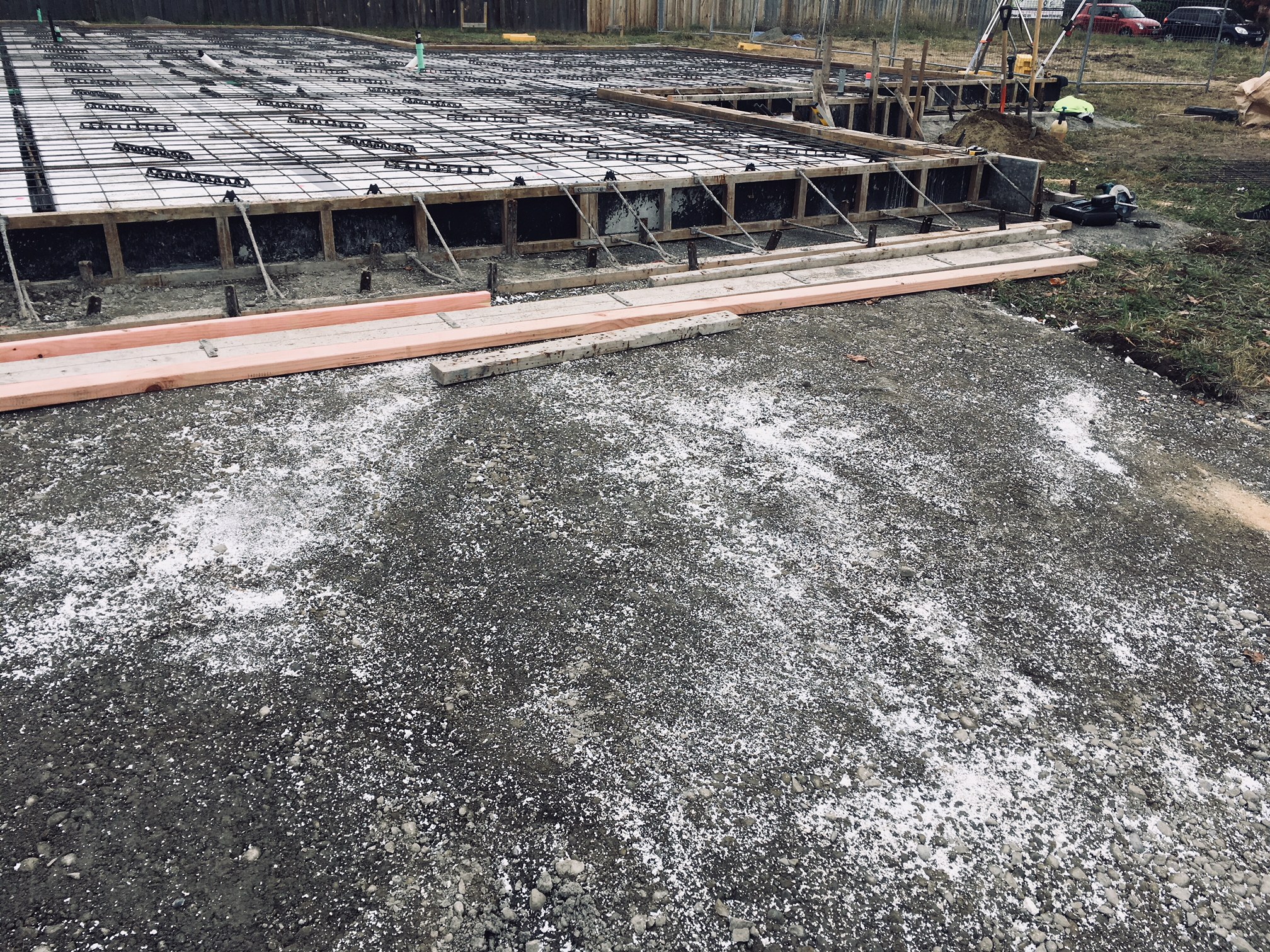
A recent photo from a building site where a polystyrene waffle slab has been installed.
“White pollution” refers to solid waste which comes from the usage of various types of life plastic products. These life plastic products are made from polystyrene and other polymers. It is difficult to degrade and dispose of resulting in severe urban environmental consequences.
Every year in New Zealand about 20,000 homes are built and most of the foundations are still polystyrene waffle slabs. From those 20,000 homes each generate about 40 m² of soil polluted by polystyrene offcuts and waste. This adds up to around 800,000 m² of polluted soil every year.
Through waffle slabs alone the area polluted from pods offcuts is the size of 100 rugby fields all lined up one after another covered in polystyrene!
New Zealand is currently ranked the world’s 10th most wasteful country, producing 3.68 kilos of waste per capita a day. New Zealand’s population is around only 4.693 million people, so our waste is huge and unless we all make and effort our old “Clean Green” image is going to disappear.
EPS is expanded polystyrene that is 95% air once you have cut the EPS all the tiny beads break up and fly away and that is the real issue with using EPS in a waffle slab. Because the EPS is mostly air this makes it difficult to compact which in turn makes it expensive to transport to either a recycling depot or to a landfill. A portion of the pollution from EPS offcuts end up underground within your landscaping at a new home because it is basically impossible to collect all the beads flying around. The other EPS beads fly into the neighbouring yards, into storm water drains and eventually into our sea.
An article in Stuff dating back from February 18, 2016 (1) talks about that EPS beads were continually washing up on their shoreline. It was never proven where this Polystyrene was coming from but we all need to remember this product and the way we dispose of it is endangering our wildlife. Polystyrene is not biodegradable, and the EPS beads can be mistaken by fish and birds as fish eggs and has the potential to cause blockages in their digestive systems.
An article by Branz published back in 2002 (2) showed that the construction industry was producing up to 17% of all waste in landfills. But if we took into consideration also the waste in the cleanfill it increasing to around 50% of all New Zealand’s generated waste. In the 2002 the Ministry of the Environment set out clear guide lines that the Construction and Demolition industry needed to reduce their landfill waste by 50% by 2008. I was not able to find any articles to back up whether this target was ever achieved (and for this reason I suspect it was not).
A sensible step forward would be to eliminate the polution from EPS offcuts by substituting polystyrene pods with more modern and effective plastic void formers.
More info are available at: Plastic void formers for foundations and 10 reasons for choosing a Firth RibRaft® X-Pod™
Fabio Parodi
CPEng MIPENZ Dott.Ing(ITA) M.Eng(Hons)
CEO and Founding Director of Cresco
www.cresco-group.com
www.cresco.co.nz
(2) https://www.branz.co.nz/cms_show_download.php?id=292a5866bacbf3aad00794c5f014c024f8f36a6d
 lateral thinking.